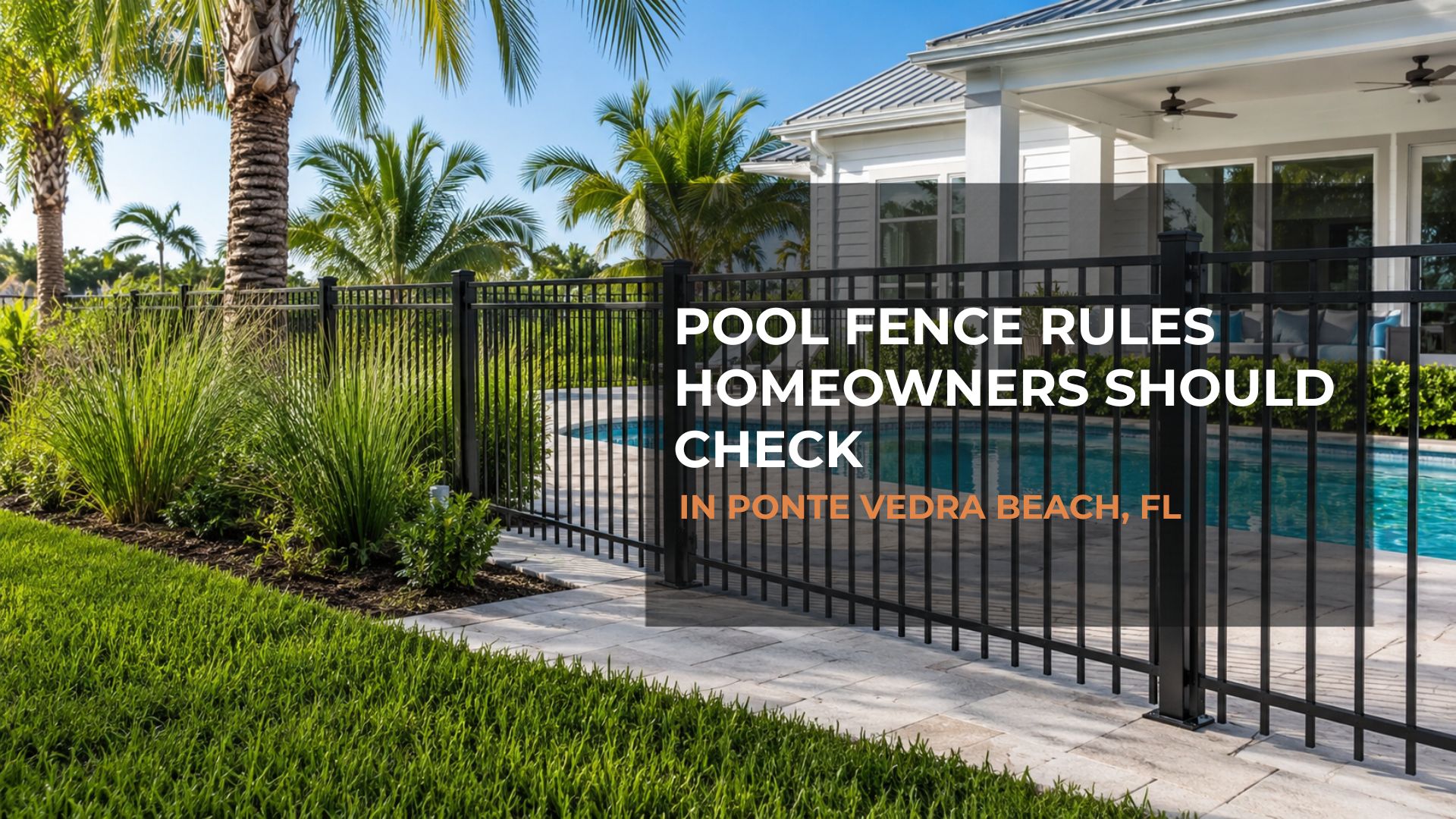
If you are planning an aluminum pool fence in Ponte Vedra Beach, FL, the first thing to know is that pool fencing is not just a style choice. It is a safety barrier. That means homeowners should check the basic pool fence rules, gate setup, and layout details before choosing panels, colors, or decorative upgrades. In St. Johns County, pools must be fenced unless the yard is fenced, and the fencing must be at least 4 feet high with a self-latching gate.
That is why the smartest way to plan aluminum pool fencing in Ponte Vedra Beach is to think about compliance and daily use at the same time. A fence can look great and still create problems if the height is wrong, the gate is placed poorly, or the barrier does not control access the way it should.
A Pool Fence Has a Different Job Than a Regular Yard Fence
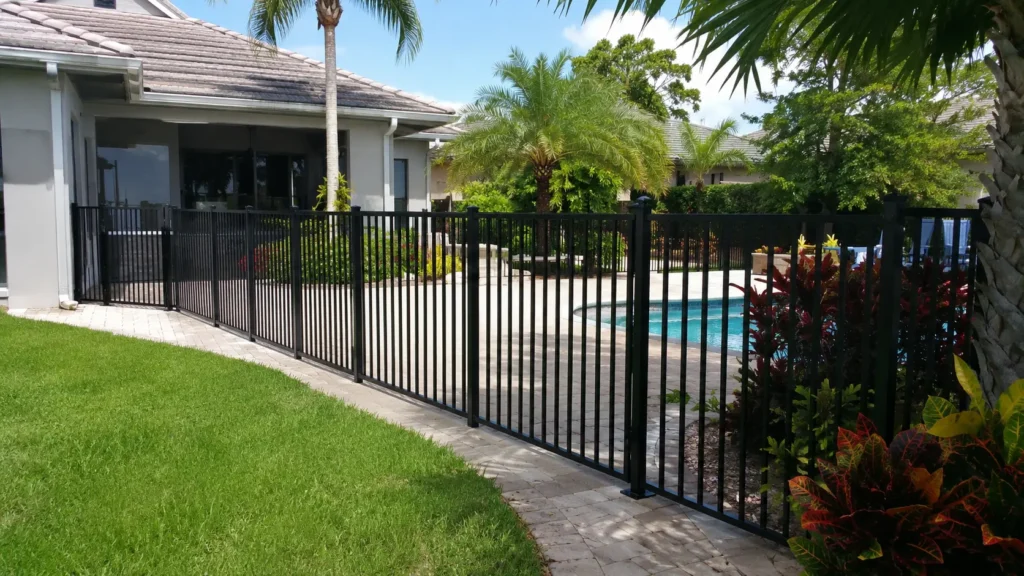
A standard yard fence usually marks a boundary. A pool fence has a different purpose. It is there to help control access to the pool area and create a real barrier around the water. That is why homeowners should not assume that any existing yard fence or decorative fence will work as a pool barrier.
This is one of the biggest mistakes people make before aluminum fence installation in Ponte Vedra Beach, FL. They focus on what looks best around the patio or backyard, but pool fencing has to do more than match the house. It has to work as a safety feature first.
Start With the Minimum Fence Height
One of the first pool fence rules to check is height. St. Johns County says the fence must be at least 4 feet high. That is the starting point, not just a design suggestion.
For homeowners comparing fence styles, this matters early. A fence that feels right visually may still need to be adjusted if it does not meet the minimum height needed for a code-compliant pool fence in Ponte Vedra Beach. It is much easier to build the plan around the right height from the beginning than to change it later.
The Gate Setup Matters More Than Most Homeowners Expect
The fence panels are important, but the gate is often where pool barrier problems start.
St. Johns County says pool fencing must have a self-latching gate. Florida law goes further and says gates that provide access to swimming pools must open outward away from the pool, be self-closing, and have a self-latching locking device with the release mechanism placed on the pool side so a young child cannot easily reach it.
That means homeowners should not treat the gate as a minor add-on. A self-latching pool gate in Ponte Vedra Beach is one of the most important parts of the whole project. The gate should work for safety every single day, not just pass inspection once.
The Fence Layout Has to Control Access to the Pool
The next thing to check is the layout.
A pool fence only works if it actually separates the pool area from the rest of the property in a meaningful way. That sounds obvious, but this is where many projects get messy. A fence can be the right height and still fail as a practical pool barrier if the layout leaves easy access points, poorly placed gates, or awkward walk paths that people keep working around.
Before installing pool barrier fencing in Ponte Vedra Beach, FL, homeowners should think about:
- where people usually enter the yard
- how they move between the house, patio, and pool
- whether the gate is in the safest place
- whether there are too many access points
- how the fence connects to the rest of the yard
This is one reason pool fence planning should happen before materials are ordered.
Why Aluminum Is a Popular Pool Fence Choice
Aluminum is a common choice for pool fencing because it gives the area a more open look. Around pools, many homeowners do not want a heavy fence that makes the yard feel closed in. Aluminum helps keep sightlines open, which can be useful around patios, lanais, and outdoor living areas.
That makes aluminum pool fencing in Ponte Vedra Beach a strong fit for homeowners who want safety without losing the cleaner look of the pool area. It can also work well with different home styles, especially when the goal is to make the barrier feel lighter and less bulky.
Check the Gate Count Before You Finalize the Design
Another thing homeowners should check early is how many gates the fence really needs.
It is easy to assume that more access points are more convenient, but every gate changes the project. More gates usually mean more hardware, more labor, more cost, and more opportunities for a weak point in the barrier. For a pool safety fence in Ponte Vedra Beach, FL, fewer well-placed gates often make more sense than multiple entry points that complicate the layout.
A simple pool fence plan is usually easier to use, easier to secure, and easier to keep consistent with the purpose of the barrier.
Do Not Assume Existing Fencing Automatically Solves the Problem
Some homeowners already have fencing around the yard and assume that adding a small section near the pool will be enough. Sometimes that works, but sometimes it does not.
Because St. Johns County says pools must be fenced unless the yard is fenced, homeowners should look carefully at whether the existing fencing really functions as a complete barrier.
This is where the project can become more complicated than expected. The question is not only whether there is already a fence on the property. The question is whether the current layout, access points, and gate setup actually work as a proper pool barrier.
Questions Homeowners Should Ask Before Installing an Aluminum Pool Fence
Before moving forward, ask a few simple questions:
- Will this fence meet the pool barrier requirements?
- Is the fence at least 4 feet high?
- Is the gate self-latching?
- Does the gate need to be self-closing and open away from the pool?
- Does the layout fully control access to the pool area?
- Does the project need county permit review or other approval steps?
- Is aluminum the best fit for how we use this outdoor space?
These questions help homeowners avoid expensive changes later.
Bottom Line for Ponte Vedra Beach Homeowners
Before installing an aluminum pool fence in Ponte Vedra Beach, FL, homeowners should check more than just the style they like best. The most important things to confirm first are the minimum fence height, gate requirements, barrier layout, and any local permit or inspection steps tied to the project. In St. Johns County, the basic starting points are clear: pool fencing must be at least 4 feet high and include a self-latching gate.
Aluminum is often a smart choice for pool fencing because it keeps the area looking open while still working well as a safety barrier. The key is making sure the fence is planned correctly from the start. If you want help designing a pool fence that fits your yard, pool area, and local requirements, M.A.E Contracting can help you plan an aluminum fencing project that makes sense for both safety and everyday use.